Pet Passport & Microchip Requirements Guide 2026
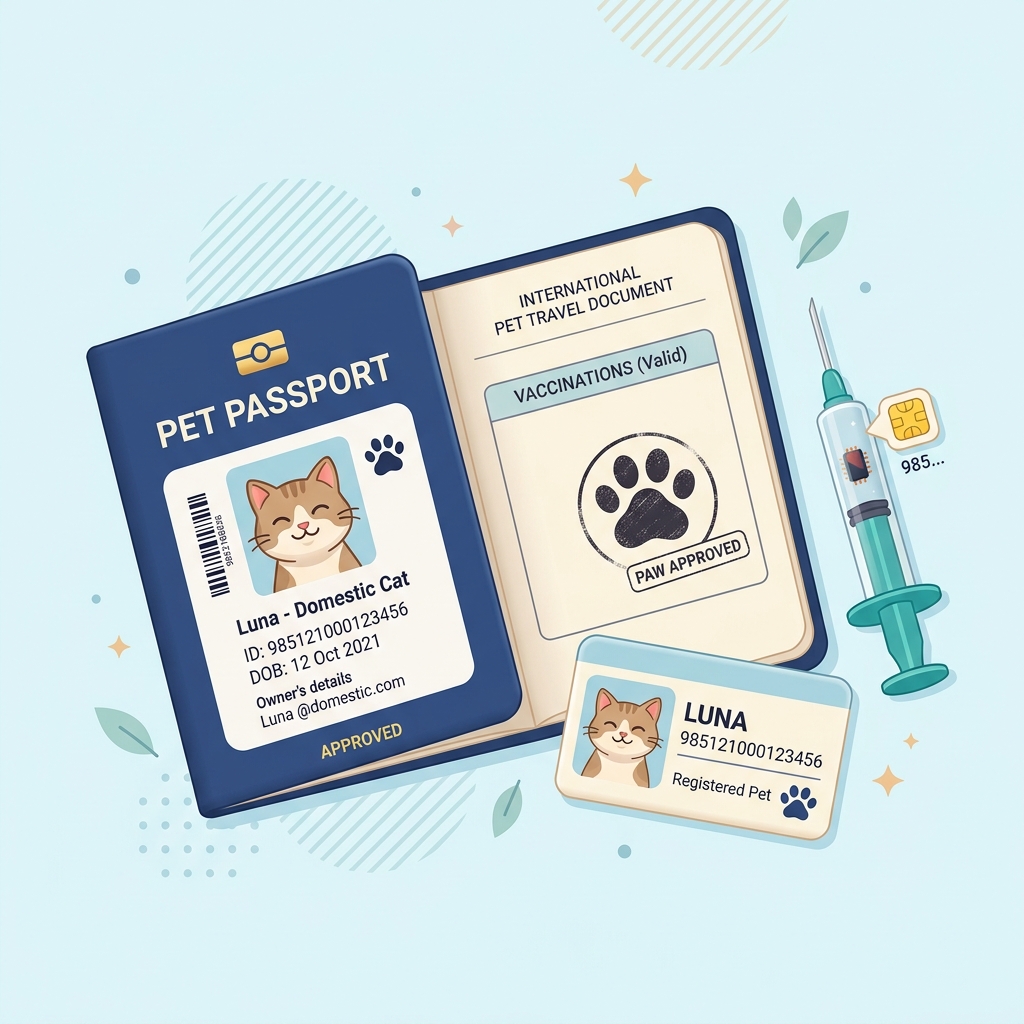
To secure the safety of our pets and facilitate legal travel, microchipping and official passports are mandatory in many countries. This guide walks you through the pet registration process.
How the Microchip & Passport Process Works
- Step 1: Clinical Check: The veterinarian performs a brief checkup.
- Step 2: Injection: A microchip containing a unique 15-digit code is injected under the skin between the shoulder blades.
- Step 3: Passport Issuance: The chip number is registered in the official government registry (PETVET), and a physical pet passport detailing vaccines and ownership is handed to you.
International Travel Checklist
If you plan to travel internationally with your pet, a Rabies Titre Test is usually required. This test verifies that the rabies vaccine has successfully triggered antibodies and must be conducted at an approved laboratory at least 3 months prior to travel.
Legal Note: Ownership and address changes must be reported to the local registry within 15 days to keep passport records up-to-date and legal.
Frequently Asked Questions
Q:Does microchipping hurt or carry risks?
The microchip is about the size of a grain of rice and is injected under the skin. The procedure takes seconds, does not require anesthesia, and carries no health risks.
Q:Where can I get a pet passport?
Licensed private veterinary clinics or official agricultural ministries issue the pet passport immediately after administering the microchip.
Q:What else is required for international travel?
In addition to a microchip and passport, you must have an active rabies vaccine and a Rabies Titre Test report issued at least 3 months prior to travel.
Manage the Vaccination Schedule in Your Pocket
Download the PetTrack app to track your kitten's vaccine doses and collaborate with your vet.